Reducing the Product Carbon Footprint (PCF) of our products is a key area of focus on the path to achieving our net-zero target. In the case of high-temperature plastics, changes to processing parameters – such as the required process temperatures – are often only possible to a limited extent without compromising the necessary material and quality requirements.
We are therefore examining and pursuing measures within our production processes in particular: the use of renewable energy, investments to improve the energy efficiency of our plants, and the development and evaluation of alternative materials. Where technically and application-specifically suitable, these include materials containing a defined proportion of recycled content or a bio-based component. We publish current key figures, projects and progress in our Sustainability Report. These measures support the implementation of our net-zero target for 2046, which has been validated by the Science Based Targets initiative.
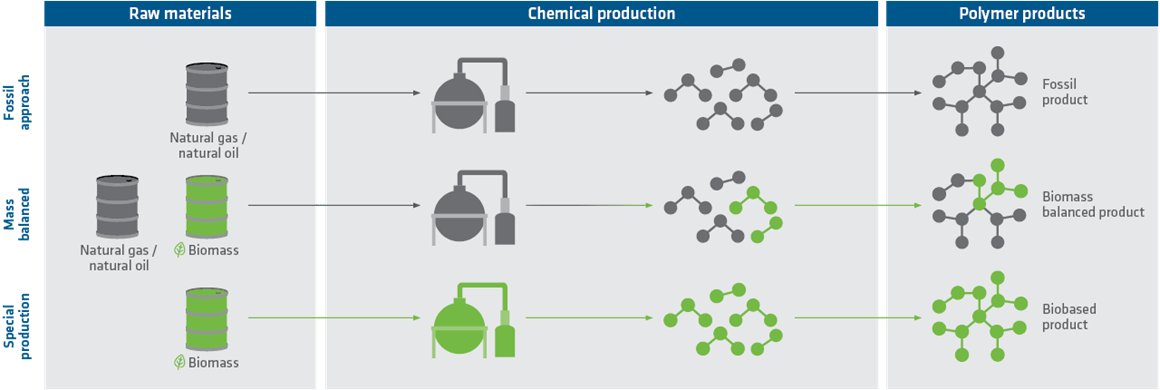
Biomass balanced signifies the incorporation of organic raw materials, sourced from kitchen or agricultural waste or residues from the wood industry for instance. Through a chemical process, these materials are transformed into bio-based monomers, which is then blended with fossil monomers and processed through the same chemical reactions into polymers as pure fossil products. The resulting mixture, comprising both bio and fossil monomers, is classified as biomass balanced.
The distinction between biomass balanced and mass balanced lies in the source materials. Biomass balanced products use organic raw materials, while mass balanced products may utilise chemically recycled plastic monomers, among other sources, blended with fossil monomers during production.